History
The history of Podere Tauley has its roots in the agricultural history of Vicolungo, an area that for centuries has been characterised by the presence of large properties, farmhouses, mills and cultivated lands.
The first documented events in the Vicolungo area date back to the 15th century, when the town became part of the domains linked to the Sforza family. In 1450, Francesco Sforza granted Vicolungo and Landiona to the brothers Giovan Pietro and Antonio Rabozio. It was Antonio Rabozio, after the military events that affected the town in the following years, who built a new fortress within the ancient ricetto of Vicolungo.
Over the following centuries, the territory passed through various noble families and estates. Among these, the Gritta family was particularly important, having come to own a significant portion of Vicolungo's assets in the 16th and 17th centuries. Their properties included the castle and fortress, as well as numerous houses, lands, mills, and farmhouses scattered throughout the surrounding area.
It is precisely within this system of agricultural properties that one of the first direct testimonies of the place we know today as Podere Tauley appears.
In an inventory of the Gritta family's assets drawn up on July 21, 1628, a "Cassina appellata in Taulei" (literally, "house in Taulei") is listed among the numerous properties located in the Vicolungo area. The same document records several other farmhouses and dwellings, demonstrating how the area was already organized into a network of distinct agricultural settlements, each dedicated to cultivating the land and managing rural activities.
The presence of the name Taulei in a document from almost four centuries ago therefore represents particularly significant evidence: the toponym was already firmly associated with a farmhouse in the Vicolungo area in the seventeenth century.
In the second half of the 17th century, the Gritta family's inheritance led to the progressive reorganization of their properties. A significant portion of the assets passed to the Ospedale Maggiore della Carità of Novara, which transformed the acquired properties into actual agricultural holdings, renting them out to various tenants.
This transformation marked an important change in the history of the area: the ancient noble properties progressively lost their residential and defensive function and increasingly took on an agricultural vocation.
In 1744, with the sale by Count Giuseppe Caccia to the Ospedale Maggiore, the Gritta family's assets were reunited under a single owner. The buildings and lands that for generations had been linked to the fortunes of Vicolungo's noble families thus became part of a larger agricultural estate.
It is in this context that we find a new, important attestation of ownership linked to the Tauley name. On January 5, 1745, the Ospedale Maggiore of Novara sold the "Cascina Palazzi verso mattina" (Palazzi farmhouse towards morning) together with the "Cascina dei Taulei" (Taulei farmhouse) to Gio Benedetto Prachetti. This document constitutes one of the most significant historical testimonies to the existence of the farmhouse and its inclusion in the agricultural heritage of Vicolungo.
From this time on, the history of the place is part of the long agricultural continuity that has characterized the Vicolungo area. During the 19th century, the ancient castle structures underwent profound transformations and the buildings definitively lost their military and noble function, while the complex and surrounding properties continued to be used for agricultural activities.
The documented history of the Tauley name, therefore, spans at least four centuries: from the first attestations of the "Cassina appellata in Taulei" in 1628 to the "Cascina dei Taulei" recorded in 1745. It is a history that does not arise from a single event, but from the continuity of a territory and its agricultural vocation.
Today Podere Tauley takes up this legacy and interprets it in a new form, keeping alive the relationship with the land and with a place whose name has been documented for almost four hundred years.
An ancient name, linked to a farmhouse and an agricultural territory, which continues to tell the story of Vicolungo through the work of the land.
If you're interested into, you can find an even broader and more complete story at this link.
Rebirth
The rebirth of Podere Tauley can be described as the moment when a place once again experiences a clear intention. It's not simply a matter of reclaiming space or restoring order to a rural property, but of restoring direction to what seemed to be languishing. Rebirth, in this sense, means reinterpreting the existing without betraying it: observing what the farm has been, understanding what it still has to offer, and shaping a project capable of uniting operational concreteness and cultural vision. This phase combines the material care of the spaces, the definition of activities, a focus on sustainability, and the construction of a recognizable identity. Every intervention, from the smallest to the most visible, contributes to transforming a silent place into a newly inhabited, productive, and accessible space. Rebirth is not a sudden gesture, but a sequence of responsible choices that restore energy, continuity, and purpose where previously there were scattered fragments.
Based on these principles and intentions, in 2025, we decided to acquire the farm to make it the basis of our project, with the aim of giving it back a clear and sustainable productive life as soon as possible.
Unfortunately, the farmhouse's structure is severely compromised due to decades of neglect. So, over the course of 2025 and 2026, we rolled up our sleeves to clean up the existing structure and prepare a comprehensive renovation project that respects its history while also being highly sustainable, consistent with our agricultural project.
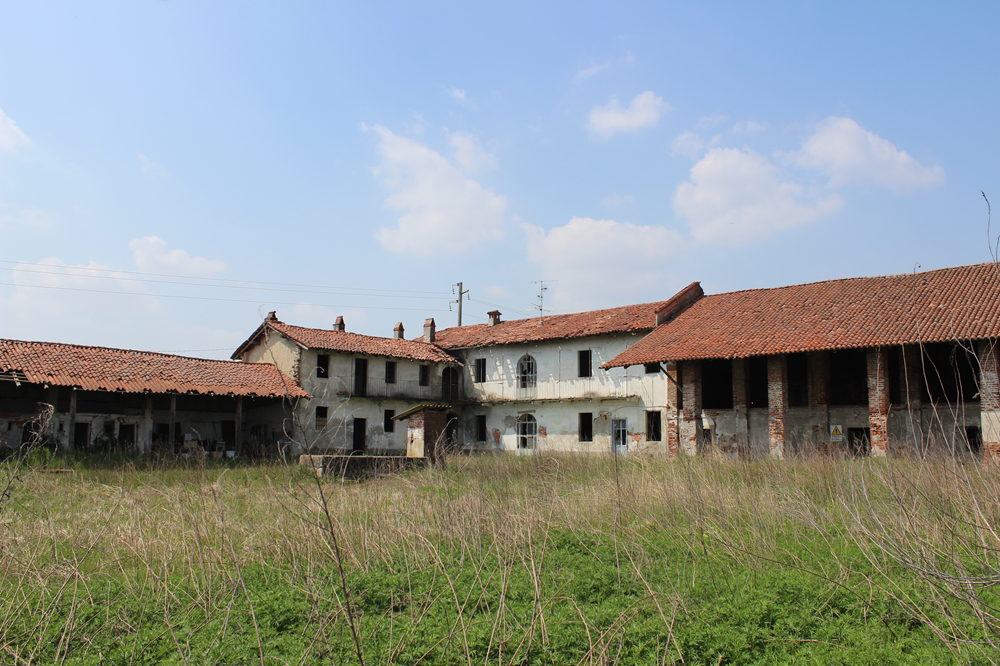
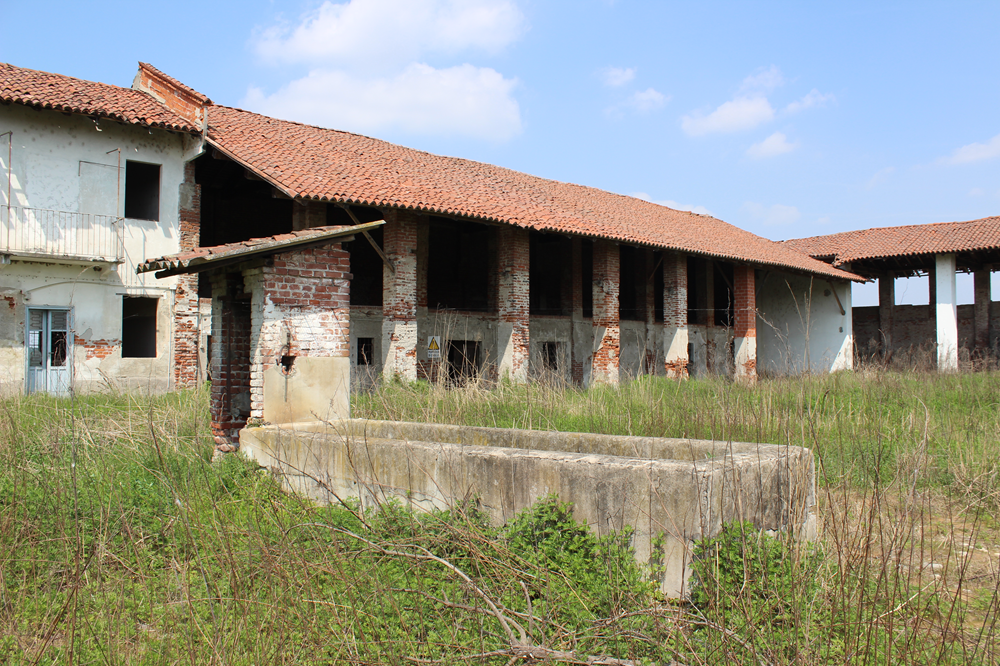
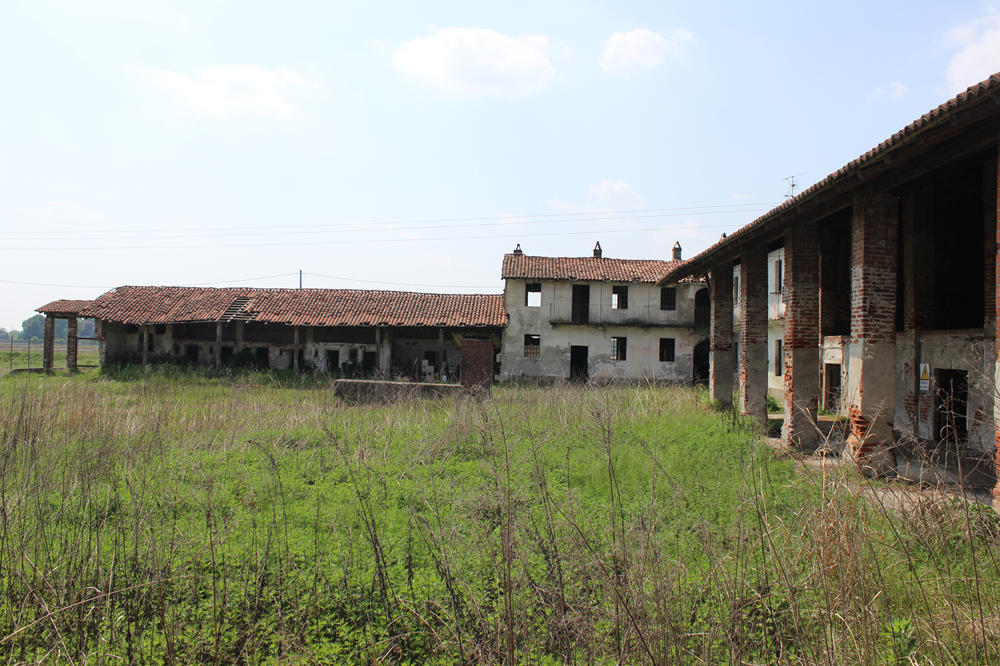
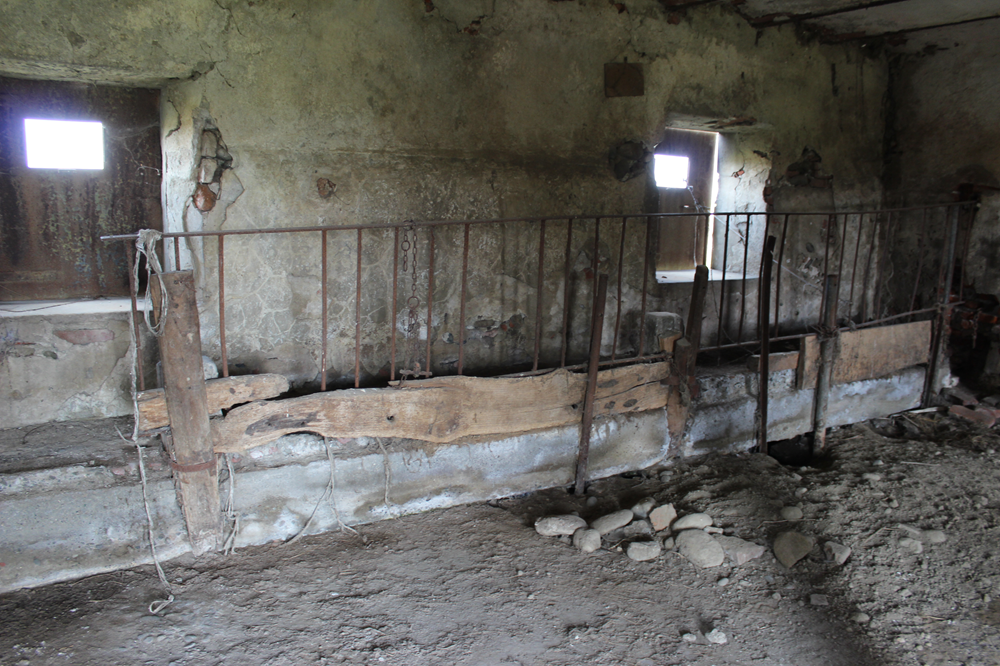
In 2026, with the recovery of the artesian well, the first interventions on the land and the installation of greenhouses (in addition to the cultivation of barley on a nearby land) we are finally able to bring our circular project to life by bringing our mushrooms and our farm-to-table beers to market (brewing at the Farm Brewery of the friends of Cascina Motta).
Future
2027 will see us undertake our most substantial and demanding project: the renovation of the farmhouse. We envision a sustainable, long-term plan that preserves the estate's history and respects its original structure, while transforming it into a welcoming, functional space where we can advance our project and, in the near future, warmly welcome you.
In addition to purely construction-related operations, the following projects fall within this restructuring context:
- Creation of a food processing facility to showcase our mushrooms in forms other than their natural state;
- Opening of an agritourism with a restaurant where guests can enjoy our own products and other local "zero-mile" offerings, skillfully prepared by Filippo;
- Opening of a food shop where our fresh and processed products can be purchased directly from the producer;
- Installation of photovoltaic systems for independent energy production;
- Restoration of the historic oven, originally used to bake bread for the entire village, to be followed by projects centered on flour and bread-making.
With the opening of the agritourism, we also plan to:
- Establish a permanent vegetable garden and an orchard dedicated primarily to in-house dining, but also for sale at our shop;
- Set up an aromatic herb garden;
- Bring some farmyard animals into the farmhouse;
- Create and run educational farms and workshops for children and others, too;
- Planning events centered on local products and culture.
We also intend to pursue a path that, after gaining some experience, could lead to organic certification for our mushroom cultivation.
As for the brewing project, we intend to establish a hop yard on the estate, allowing us to pair locally grown hops with the barley we already use in our current beer recipes. We also aim to create our own small, independent brewery with a facility located right here at Podere Tauley.
Given the property's spaciousness and the pleasantness of the surrounding rural setting, we are happy to reveal that we are also planning to set up some guest rooms.