Our mushrooms
Sustainable, nutritious, and versatile: mushrooms represent one of the most interesting crops for the future of food.
Cultivating mushrooms means producing a valuable foodstuff using relatively few resources. Their growth requires minimal water and space and can utilize organic materials and agricultural by-products, contributing to a production model that is more mindful of the environment and resource circularity.
From a nutritional standpoint, mushrooms are naturally rich in water, fiber, vitamins, and minerals, and, depending on the variety, can also provide plant-based protein. They are also low in fat and calories yet rich in flavor and texture, qualities that make them an extremely versatile ingredient in the kitchen.
It is precisely their meaty texture, intense flavor, and ability to replace or complement other protein-rich foods that have earned mushrooms the title of "meat of the future." This is not because they must necessarily replace meat, but because they can help make our diet more varied, balanced, and sustainable.
For us, growing mushrooms means looking to the future without forgetting the land: producing a delicious, wholesome food while respecting available resources and harnessing nature's extraordinary ability to transform what already exists into new life.
At present, pending the setup of our processing facility, our production is dedicated exclusively to fresh mushrooms. Availability of the various species varies according to the season and natural cultivation cycles. Please feel free to contact us to find out which varieties are currently available or expected in the near future; we would be happy to provide you with full details about our production.
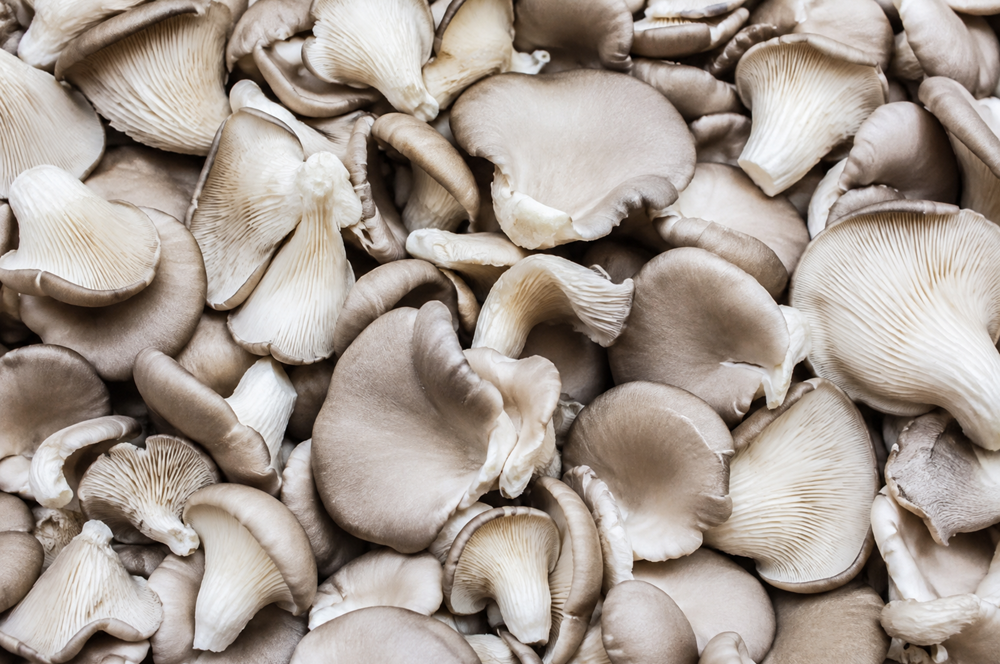
Oyster Mushroom
Pleurotus Ostreatus
The oyster mushroom derives its name from the characteristic shape of its cap, which resembles an oyster. Its color can range from gray or grayish-brown to lighter shades; it generally grows in clusters and has a fleshy, pleasantly elastic texture.
It is a particularly interesting mushroom from a nutritional standpoint: it contains protein, dietary fiber, B vitamins, and minerals, including potassium and phosphorus, while naturally having a low fat content. It is also characterized by the presence of beta-glucans and other bioactive compounds that have been the subject of numerous scientific studies.
It is extremely versatile in the kitchen. It can be sautéed, grilled, or fried, or used to enhance pasta dishes, soups, risottos, and side dishes. Its texture also makes it particularly well-suited for dishes where a pleasant "meaty" mouthfeel is desired.
Fun fact: Pleurotus Ostreatus is one of the most widely cultivated and studied edible mushroom species in the world. Its ability to grow on various organic materials and break down lignin using specific enzymes makes it interesting not only as a food source but also in terms of biomass valorization and the circular economy.
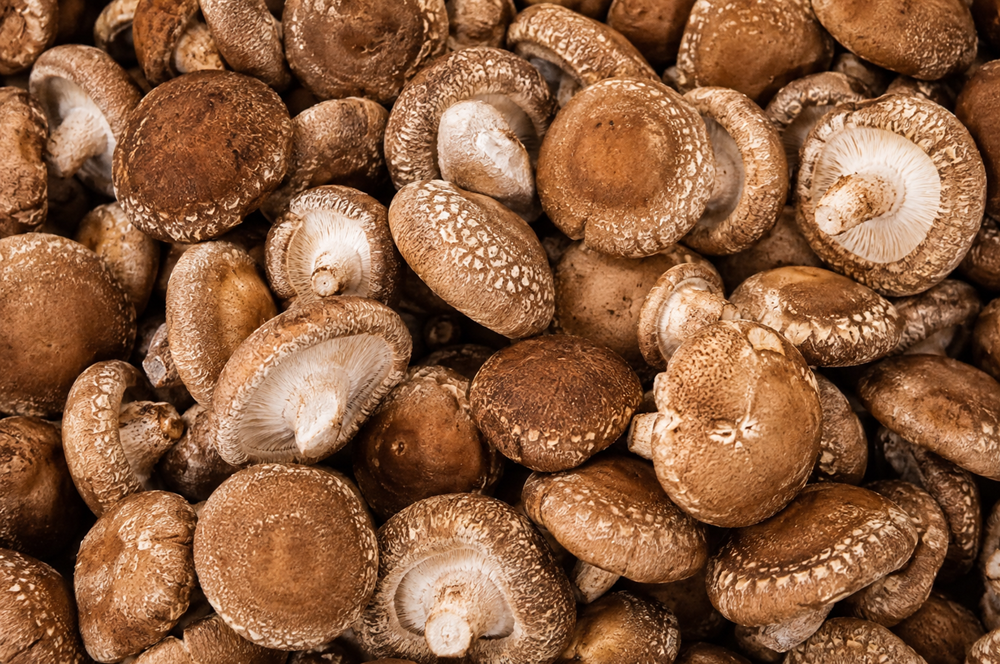
Shiitake
Lentinula Edodes
Native to East Asia, the shiitake is easily recognizable by its brown cap, often featuring distinctive lighter mottling, and its pale, firm stem. It is a mushroom with a bold character, highly prized for its intense umami flavor, which adds depth to dishes.
From a nutritional standpoint, it is a good source of protein, dietary fiber, vitamins, and minerals, including potassium, phosphorus, magnesium, and zinc. It also contains various bioactive compounds, such as polysaccharides and β-glucans. Its composition can vary significantly depending on the variety and growing conditions.
In the kitchen, it is particularly well-suited for stir-fries, risottos, soups, ramen, broths, and pasta or rice dishes. Its intense flavor allows it to serve as an ingredient that adds character to simple dishes. It is widely used and highly appreciated in Asian cuisine.
Fun fact: the Japanese name "shiitake" derives from the mushroom's traditional association with the shii, a tree species belonging to the Castanopsis genus, on whose trunks it grows naturally. Traditional shiitake cultivation replicates this natural relationship by using wooden logs; today, however, it is also grown on sawdust-based substrates.
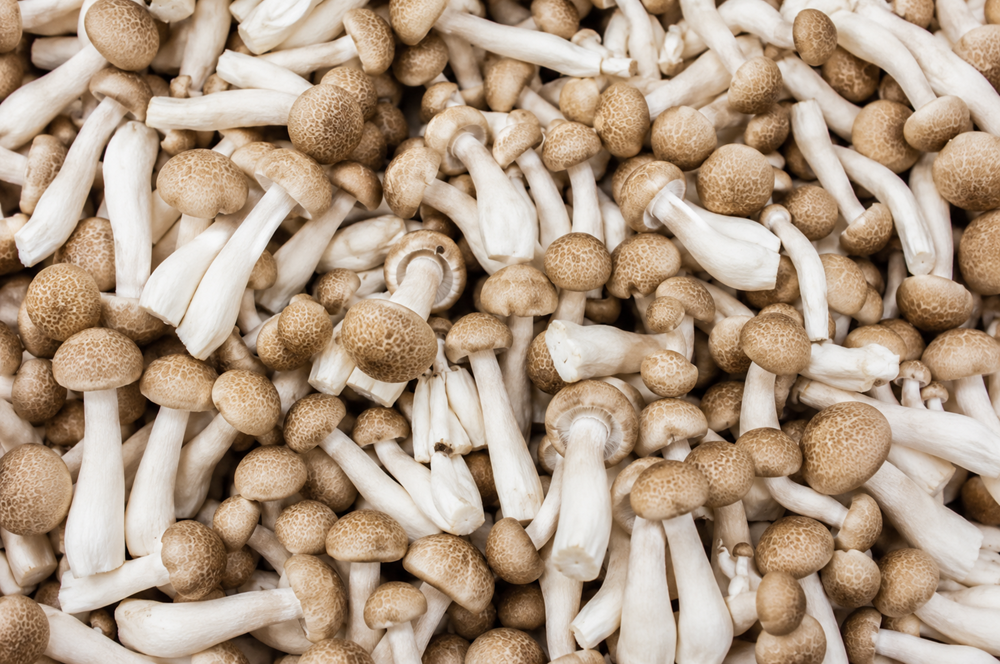
Poplar
Cyclocybe Aegerita
The poplar is one of the most distinctive mushrooms in Italian culinary tradition. Its name reflects the species' preference for the poplar tree, although in the wild it can grow on various broad-leaved trees. The cap is initially brown and convex, becoming progressively lighter as it matures; the stem is pale, fibrous, and firm.
From a nutritional standpoint, the poplar mushroom contains protein, fiber, and numerous bioactive compounds, while its fat content is relatively low. Studies on the species' composition have also revealed the presence of various phenolic compounds and characteristic metabolites.
Its intense aroma and particularly aromatic flavor make it ideal for flavorful cooking. It is excellent sautéed in a pan with garlic and parsley, and works beautifully in risottos, pasta dishes, frittatas, and savory pies, or as an accompaniment to meat and other ingredients.
Fun fact: the poplar mushroom has a very long history in Italian culinary culture. Its cultivation on poplar logs was already known in Roman times and is even described in the works of Pliny the Elder.
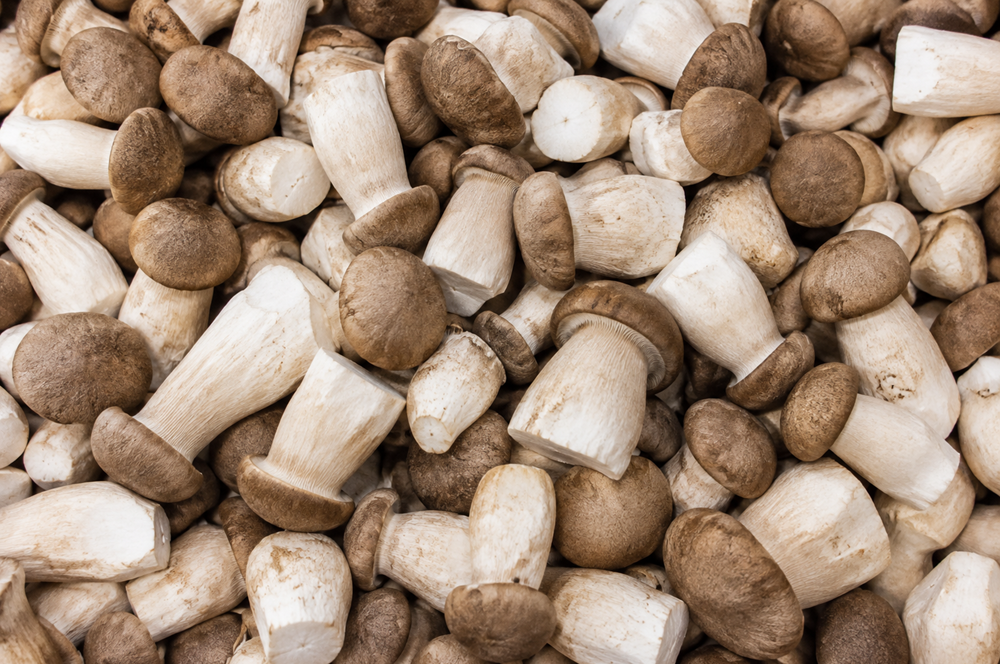
King Oyster Mushroom / Cardoncello
Pleurotus Eryngii
The king oyster mushroom is easily recognizable by its large, fleshy white stem topped with a brownish-grey cap. Compared to other Pleurotus species, it features a particularly compact structure and a texture that remains pleasantly firm even after cooking.
Like other mushrooms of the Pleurotus genus, it is characterized by a good content of protein and dietary fiber, combined with a low fat content. It is also a source of minerals and contains polysaccharides and other bioactive compounds. Comparative analyses of various cultivated species have revealed a particularly interesting nutritional profile for the Pleurotus Eryngii.
Its texture is its true strength in the kitchen. The king oyster mushroom is excellent for grilling, roasting, pan-frying, or baking, but it can also be used in risottos, pasta dishes, sides, and vegetarian recipes. When sliced lengthwise and grilled, its meaty stem can take center stage in a dish.
Fun fact: the cardoncello mushroom is often considered one of the most interesting varieties for vegetarian cuisine, precisely because of its firm, meaty texture. Indeed, both culinary and scientific literature highlight its suitability for grilling, sautéing, braising, and stewing.